
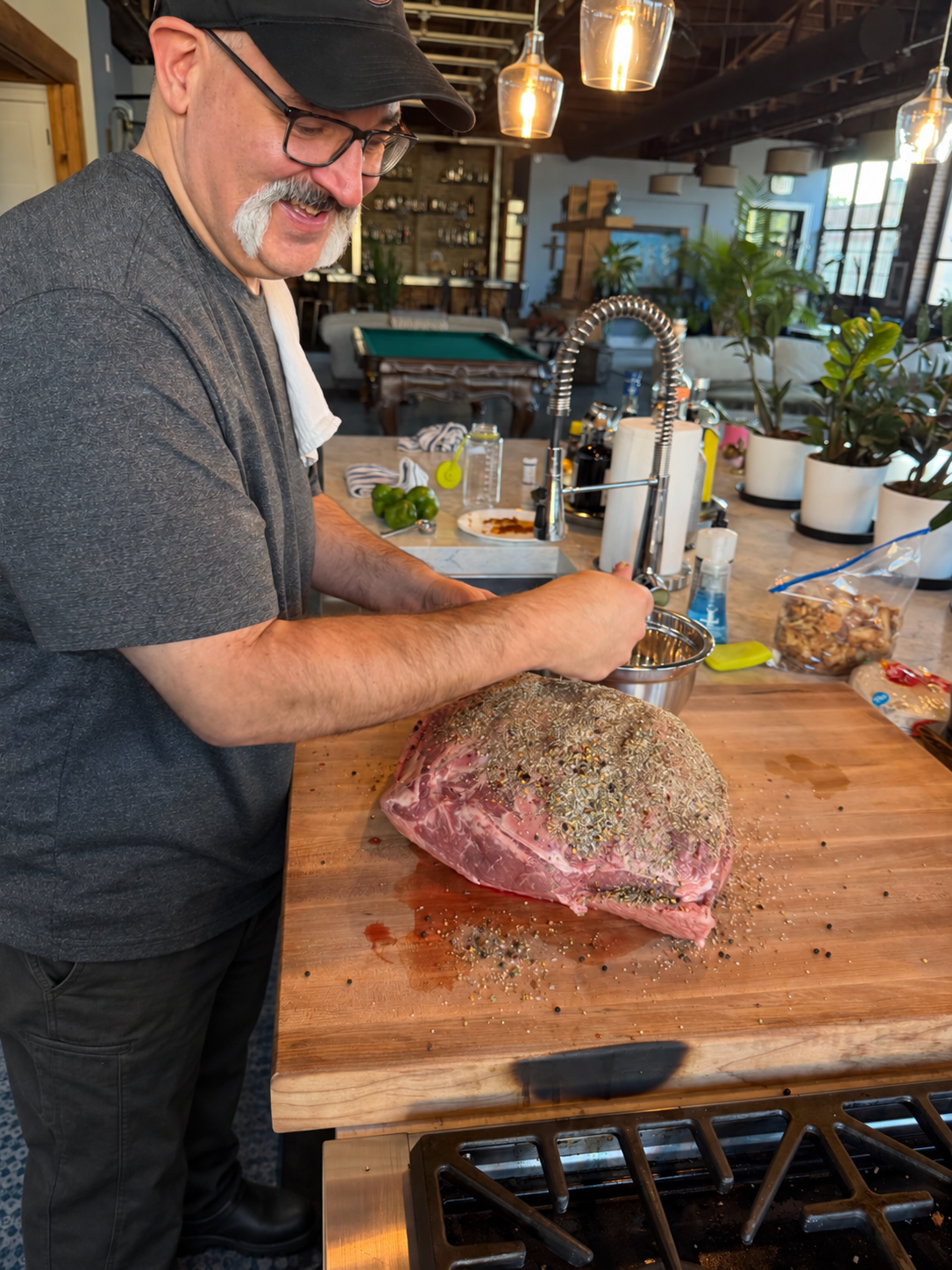

WHAT WE TESTED.
- Bottom round roast
- 17.88 lb starting weight
- 15 lb 1 oz after cooking
- Beef, jus and toppings prepared
- Chilled roast ready for slicing
- Sandwich tasting comes next
If you've ever lived in Chicago—or even spent a long weekend here—you probably know the Italian beef.
Not roast beef.
Not a French dip.
Italian beef.
It's one of those foods Chicagoans have very strong opinions about.
The beef has to be right.
The jus has to be right.
The bread has to be right.
The giardiniera has to be right.
And then there is the very personal question of how wet you want the whole thing.
Dry?
Wet?
Dipped?
For a sandwich that is essentially beef, bread, juice and peppers, there are an astonishing number of ways to screw it up.
Naturally, I decided to make one.
A Little Chicago Beef History
Before getting into my experiment, I went down another one of my culinary-history rabbit holes.
As it turns out, exactly who invented the Italian beef is a matter of some debate.
What seems far less controversial is why it developed.
The sandwich traces its roots to Chicago's Italian immigrant communities in the early 20th century. Chicago was, of course, the center of America's meatpacking industry, and working-class Italian families found a clever way to turn relatively inexpensive cuts of beef into enough food to feed a crowd.
The meat was roasted, sliced incredibly thin to stretch it further, piled onto bread and moistened with the flavorful cooking liquid.
One commonly told version of the story connects Italian beef to the so-called "peanut weddings" of Chicago's Italian immigrant neighborhoods. These were working-class weddings where families needed to feed a lot of people without spending a lot of money.
Thinly slicing the beef and serving it on bread with plenty of juice made a relatively small amount of meat go a very long way.
Pasquale Scala is frequently associated with those early catered beef sandwiches, while Al Ferreri and the family behind Al's #1 Italian Beef are often credited with helping commercialize the sandwich in the 1930s.
Other Chicago families have their own claims.
So rather than declare a winner in a nearly century-old beef-about-beef, I'll leave it at this:
The Italian beef wasn't just invented in Chicago.
It could only have been invented in Chicago.
A city filled with Italian immigrants, working families and, at the time, more beef than just about anywhere else in America.
And nearly a century later, we're still eating it.
No Pressure
Which brings me back to my kitchen.
This past weekend, it was finally time to take on the beef.
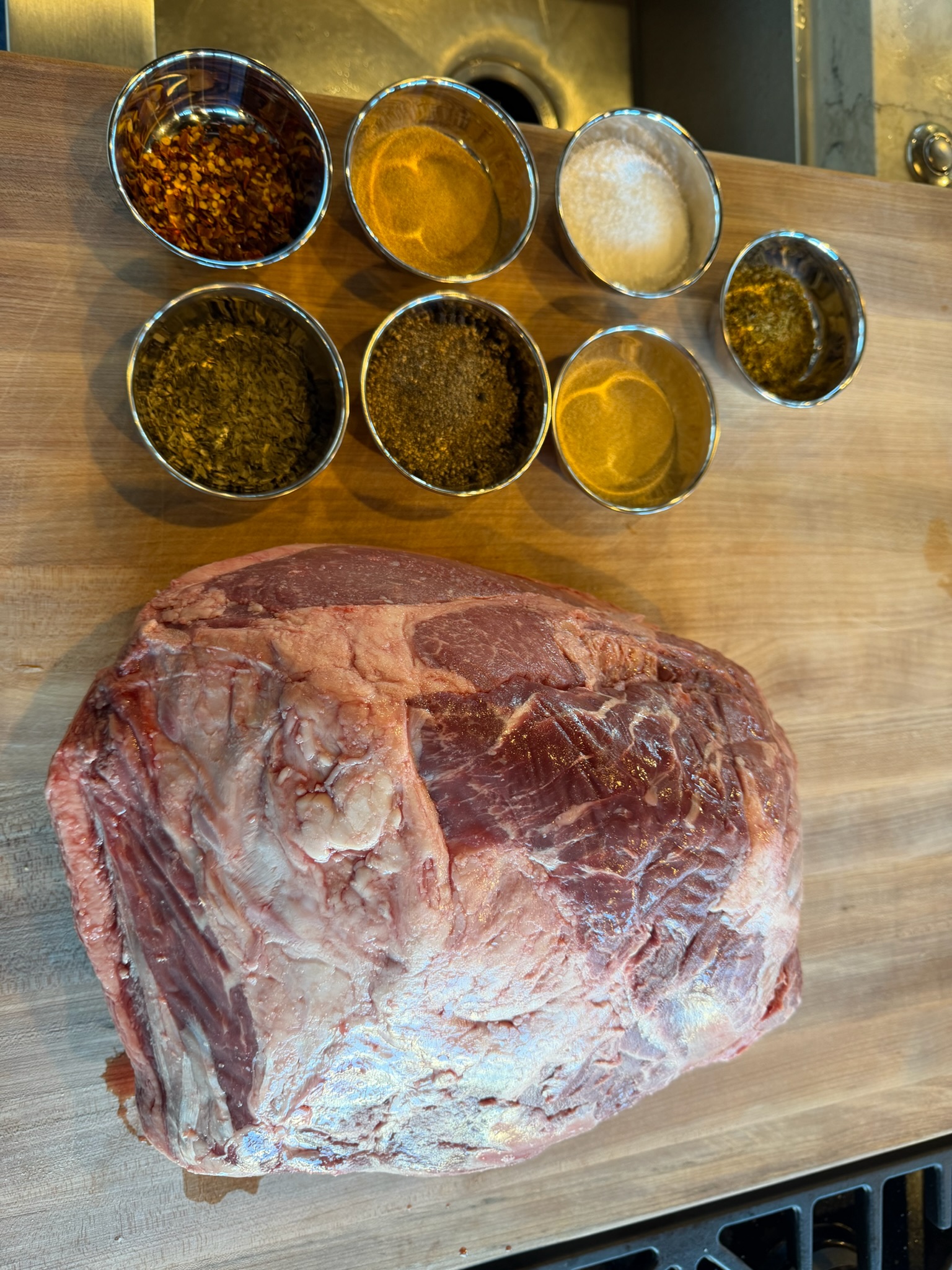
I started with a 17.88-pound bottom round roast.
Yes.
Seventeen point eight eight pounds.
If I'm going to test something, apparently I'm incapable of doing it on a reasonable scale.
The next challenge was figuring out the seasoning and, perhaps even more importantly, the jus.
Because if you know Chicago beef, you know the jus isn't an afterthought.
It's part of the sandwich.
Actually, that's underselling it.
The jus might be the sandwich.
It flavors the meat during cooking. The sliced beef eventually gets warmed in it. And if you're
ordering your sandwich dipped, the entire assembled sandwich takes a bath in it before being handed over.
So I needed to start building that flavor from the very beginning.
Season Everything
The seasoning for the roast itself was actually pretty straightforward:
Kosher salt.
Ground black pepper.
Granulated garlic.
Granulated onion.
Dried oregano.
Dried sweet basil.
And crushed red pepper flakes.
I made a huge batch.
Because if I've learned anything from roasting big cuts of meat over the last several months, it's that you can't be timid with seasoning.
A seventeen-pound piece of beef is a very different animal—literally and figuratively—from seasoning a steak.
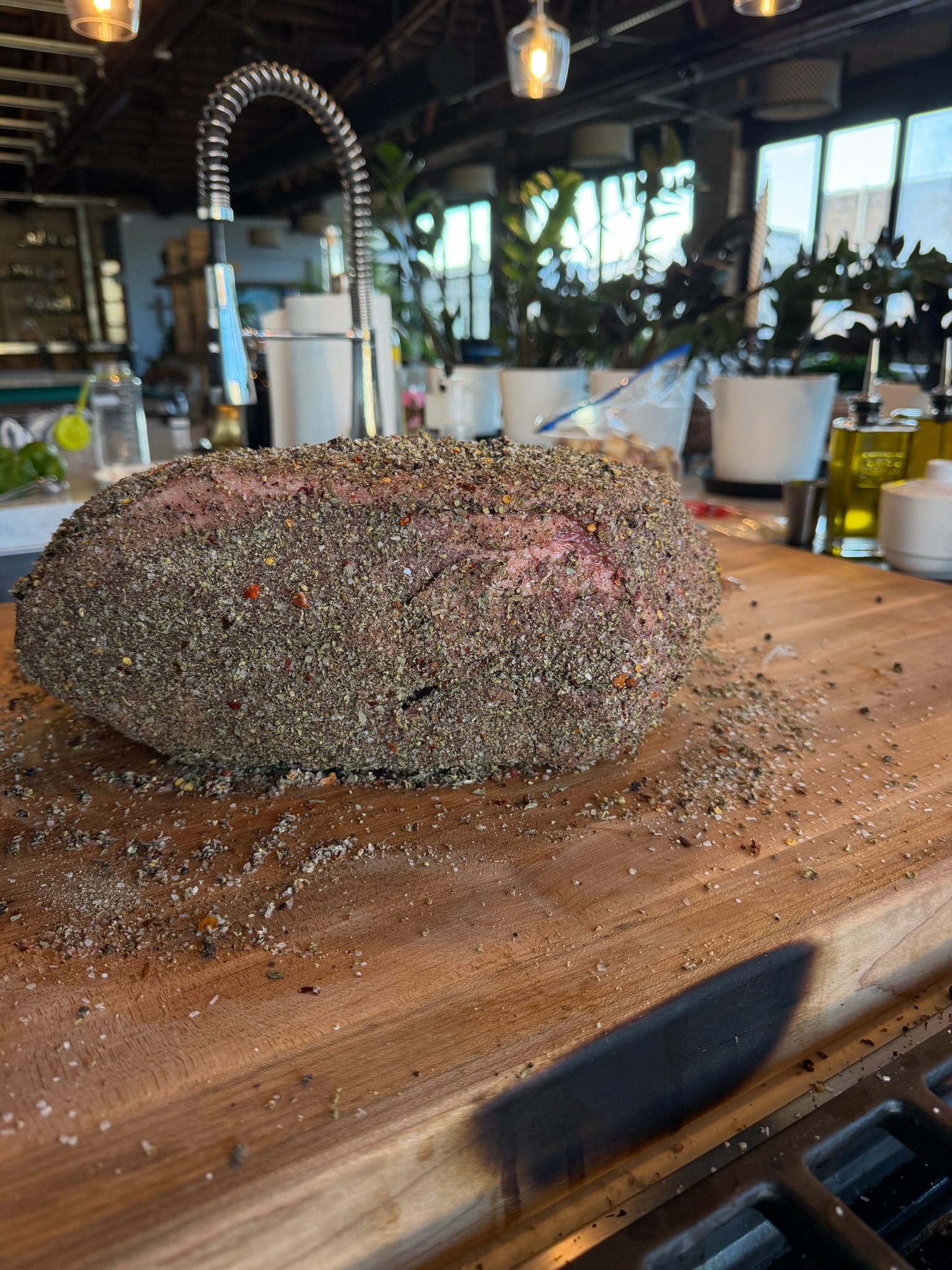
I wanted every single surface covered.
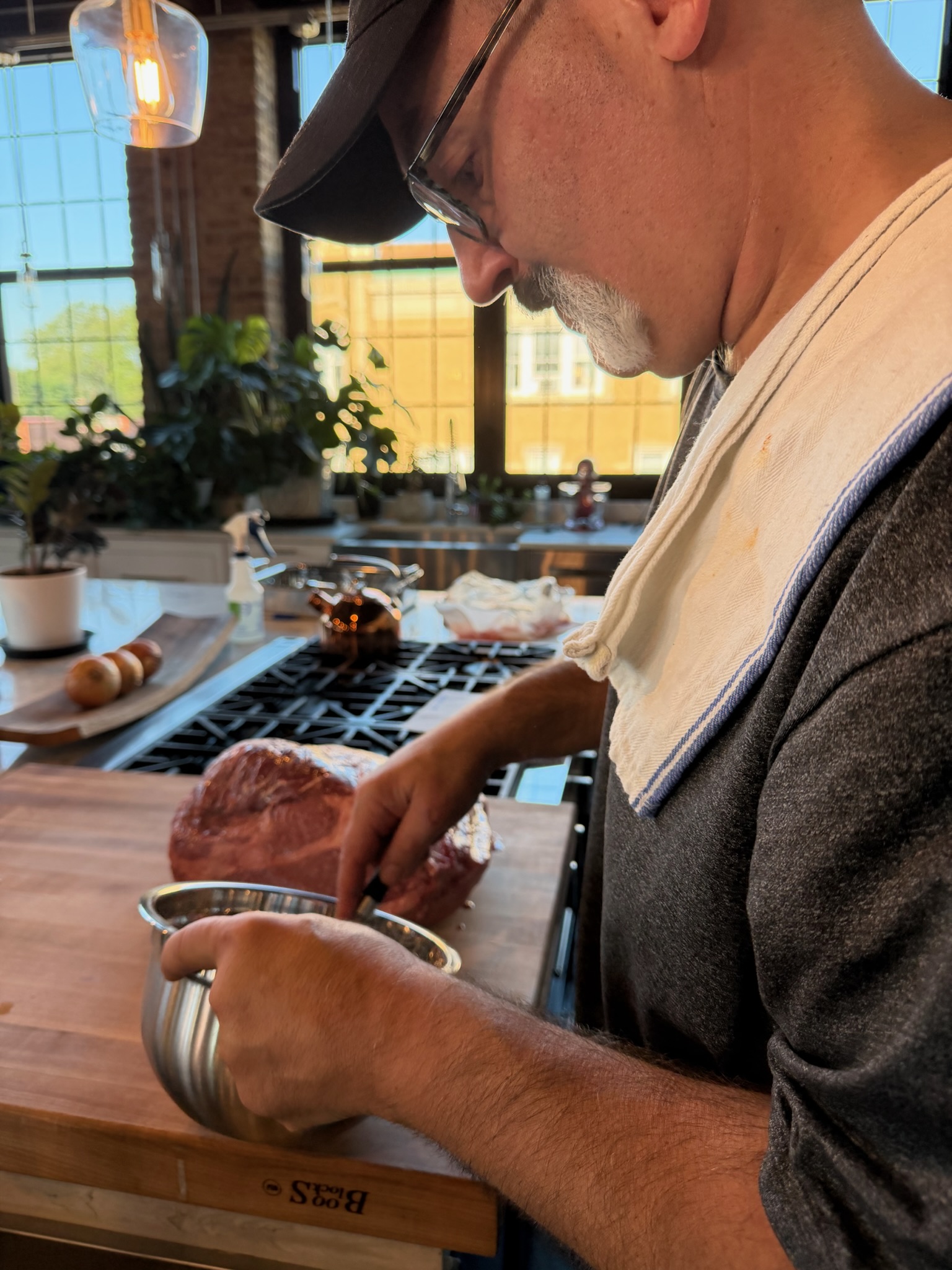
Not sprinkled.
Covered.
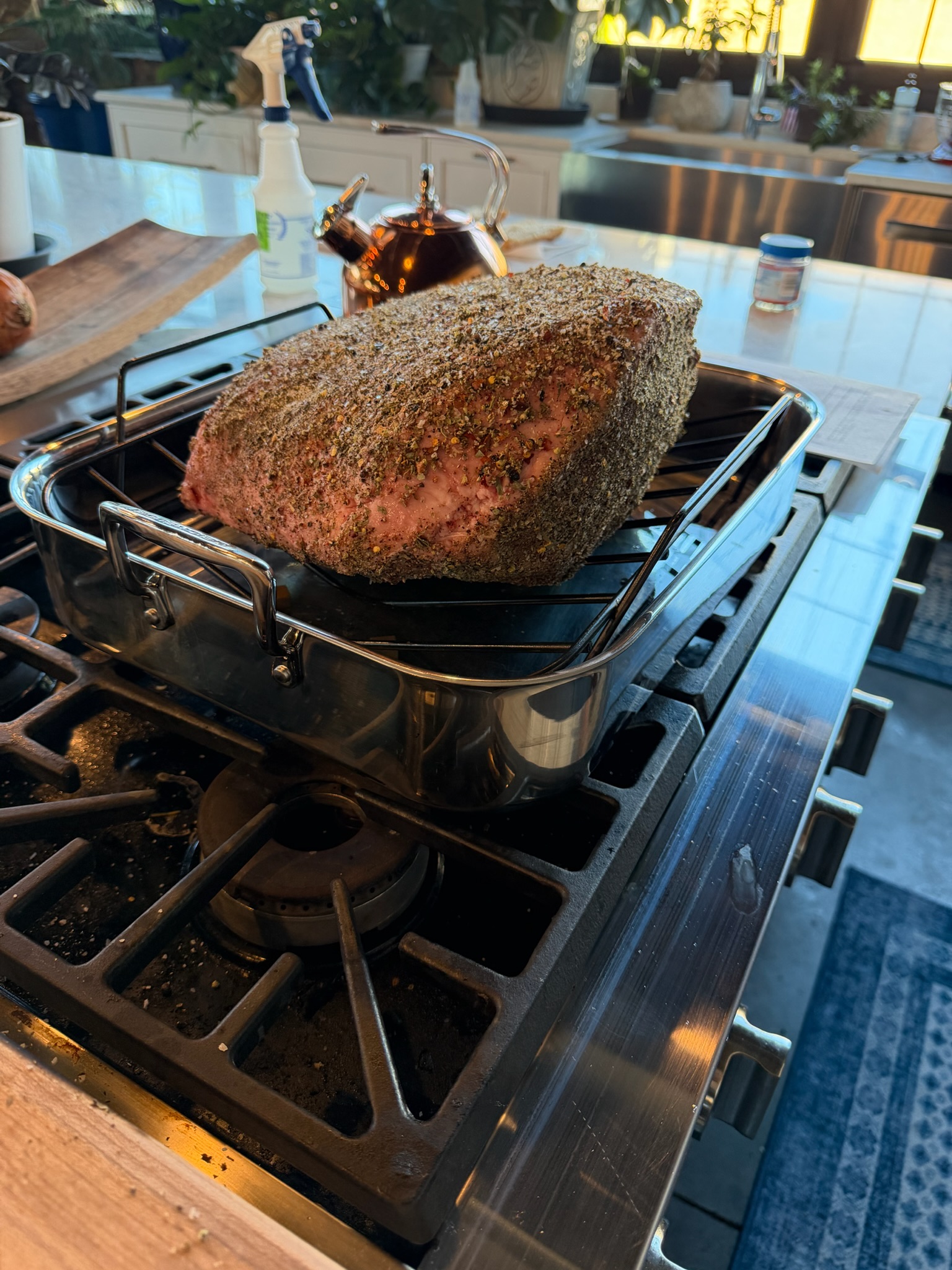
So I rubbed the seasoning into every nook, cranny and edge until that giant bottom round had a beautiful coating of herbs and spices.
Then I did something different.
Get That Roast Off the Bottom
If you've read about some of my other roasting experiments, you know my usual technique.
Meat goes into the roasting pan.
Simple.
That wasn't going to work here.
For the Italian beef, I wanted the roast elevated on a rack.
Why?
Because underneath it I was going to start building the jus.
I placed the rack into the roasting pan, set the seasoned beef on top and added 16 cups of water and eight beef bouillon cubes underneath.
Now, instead of the roast sitting in liquid, all those wonderful juices and seasonings coming off the beef during its hours in the oven could drip down into the liquid below.
The beef was cooking.
The jus was developing.
Two things happening at once.
I covered the entire pan tightly with foil.
Into the oven it went.
250°F.
Apparently 250°F has become my new favorite temperature.
Low and slow.
But This Time, Don't Cook the Beef
Here's where this cook became very different from some of the others I've done.
When you're cooking something like brisket or pulled pork, you're chasing a high internal temperature. You're trying to break down connective tissue until the meat becomes incredibly tender.
Italian beef is different.
Very different.
I wanted to pull this enormous roast at only about 125–126°F.
That felt wrong.
Everything in my brain kept looking at this massive piece of beef and saying:
You're not done.
But there was a reason.
The goal wasn't to completely cook the beef in the oven.
The goal was to cook it just enough.
Because there was another cooking stage coming later.
I pulled the roast at 126°F.
Then I waited.
An hour later, carryover cooking had brought the center to 132°F.
Perfect.
At least according to the plan.
Wait...That's Pretty Rare
After the rest, I cut the roast into manageable pieces so I could refrigerate it and get it completely cold before slicing.
That's when I got nervous.
The inside was definitely on the rare-to-medium-rare side.
Beautiful if I were serving roast beef.
But Italian beef?
I started questioning myself.
Did I pull it too soon?
Should I have gone another ten degrees?
Was tomorrow's sandwich going to look like something from a steakhouse rather than an Italian beef stand?
There was only one thing to do.
Put it in the refrigerator.
And research.
Turns Out, That's the Point
If you've ever watched Italian beef being prepared at a great beef stand, you've probably noticed something.
The beef is sliced ridiculously thin.
Not deli-meat thin.
Thinner.
Almost translucent.
Those paper-thin slices then spend time warming in the jus before they're piled onto the sandwich.
And there was my answer.
The beef shouldn't be completely cooked during the initial roast.
Those incredibly thin slices are going to continue cooking when they hit the hot jus.
If I had roasted that bottom round until it looked "done" before chilling and slicing it, I could very easily end up with dry, overcooked beef after reheating.
Suddenly that rosy center didn't look like a mistake.
It looked like planning.
I love moments like that.
But Beef Alone Doesn't Make a Beef
Here's where things get serious.
Ask a group of Chicagoans who makes the best Italian beef and you'll probably start an argument.
Ask them who makes the best giardiniera and you might end a friendship.
Giardiniera has Italian roots—the word essentially refers to vegetables prepared "garden-style"—but Chicago took the idea and turned it into something uniquely our own.
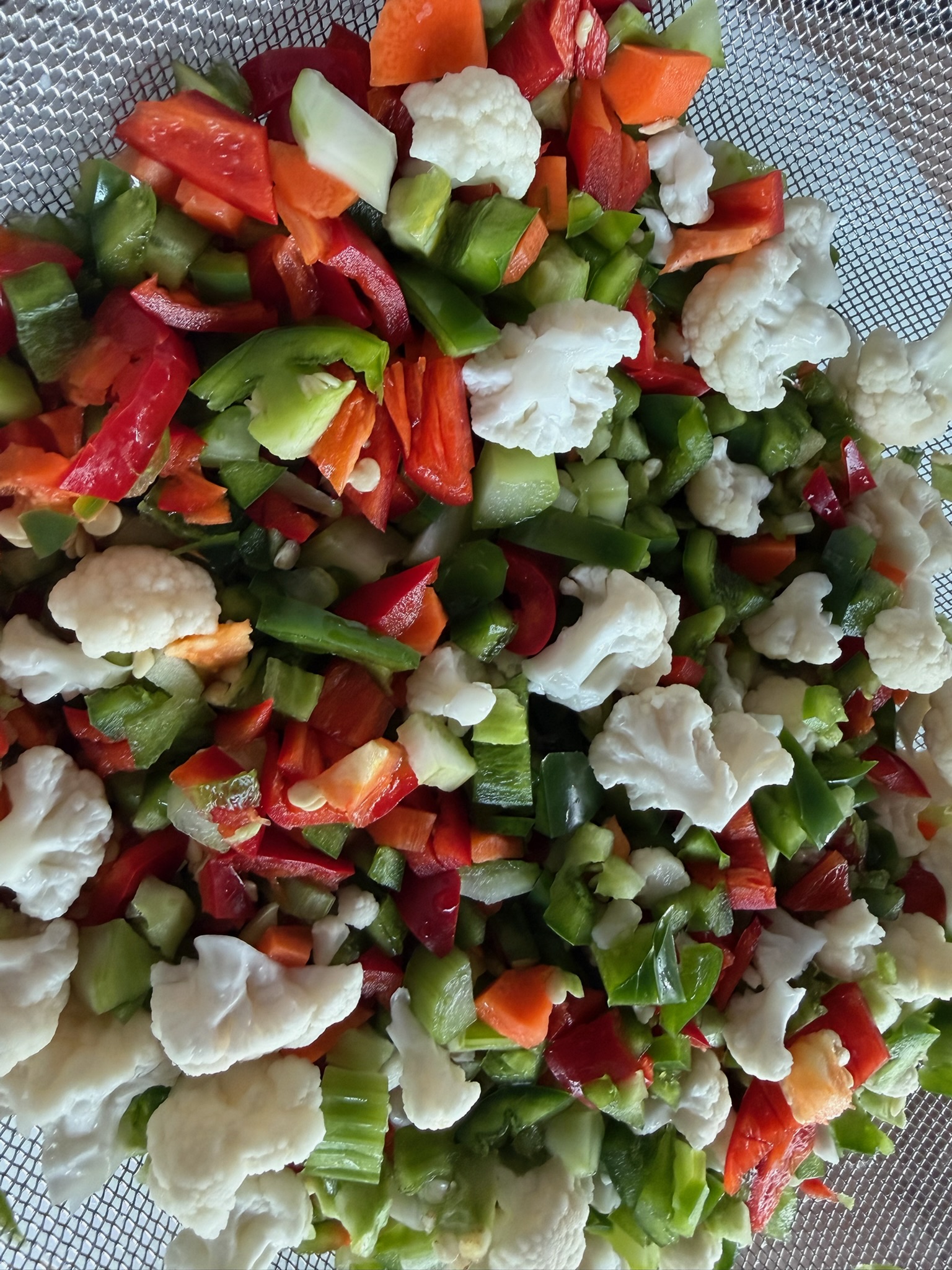
Chicago-style giardiniera is typically a combination of hot peppers with vegetables such as celery, carrots, cauliflower and sometimes olives, all chopped relatively small. The vegetables are brined or pickled and then packed with oil and seasonings.
It's spicy.
It's acidic.
It's oily.
It's crunchy.
And when that oil and those peppers mingle with the beef jus?
That's Chicago.
So, of course, I made my own.
Three Days Earlier…
Remember, I knew this beef experiment was coming.
And because apparently I have become some sort of home food scientist, I also knew I couldn't wake up on beef day and decide to make giardiniera.
Mine needed time.
The vegetables first spent about 24 hours in brine.
Then came the pickling stage.
Another 48 hours.
Which meant my Italian beef experiment actually started three days before the beef ever went into the oven.
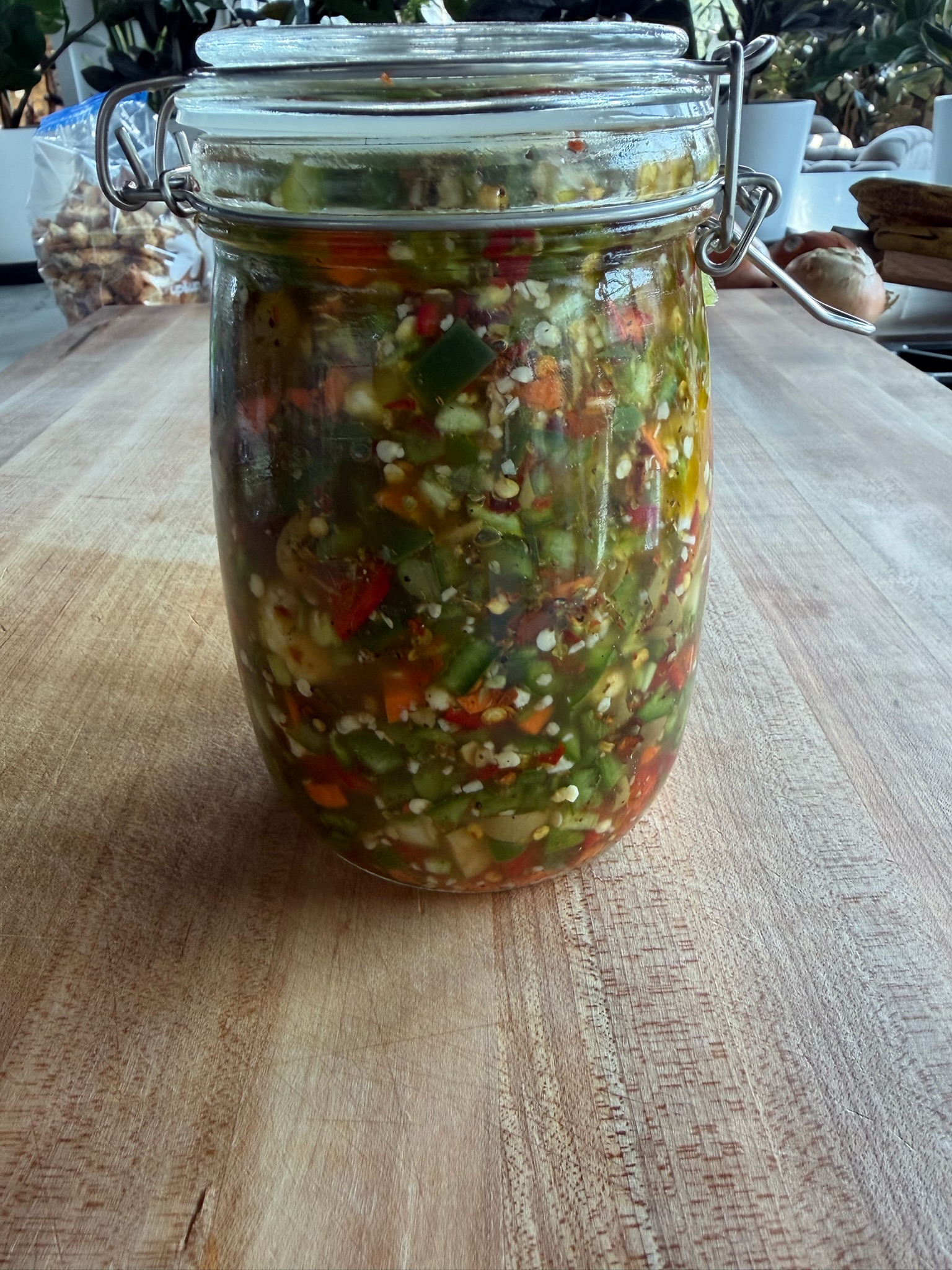
When I finally opened the finished giardiniera, it was beautiful.
Bright colors.
Crunchy vegetables.
Plenty of peppers.
Great aroma.
I tasted it.
Holy hell.
Hot.
Way too hot for me.
Of course, that's somewhat predictable considering a significant portion of the mixture consists of hot peppers.
Fortunately, I knew exactly who needed to taste it.
I handed it over to some people who actually like heat—and, more importantly, know what good Chicago giardiniera is supposed to taste like.
The verdict?
Good.
Really good.
I'll take their word for it.
My mouth was still recovering.
There's Always Sweet Peppers
Fortunately for those of us who don't particularly enjoy setting our mouths on fire, Chicago gave us another option.
Sweet peppers.
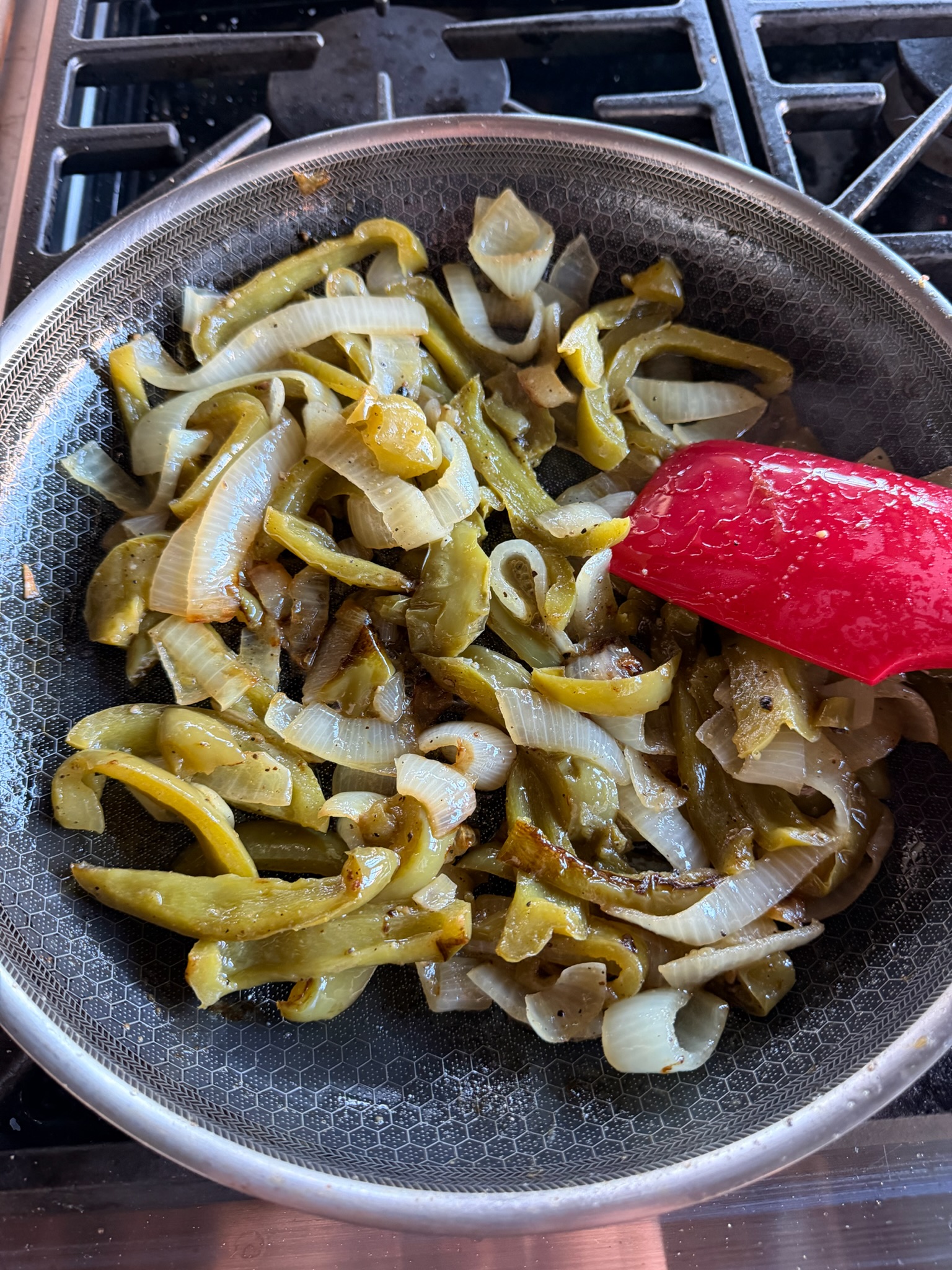
For my version, I went with slowly sautéed green peppers and onions.
Nothing complicated.
Just patience.
Low heat.
A little time.
Actually, a lot of time.
They cooked for roughly an hour, slowly softening and sweetening without getting blasted with high heat.
The result was exactly what I wanted.
Soft.
Sweet.
Savory.
And absolutely begging to be piled onto some beef.
So now everything is ready.
Almost.
The roast is cooked and chilling.
The jus is waiting.
The homemade giardiniera has passed inspection—at least among people with considerably higher heat tolerances than mine.
The peppers and onions are done.
Which means tomorrow comes the part that matters.
The Slice
Tomorrow, that nearly eighteen-pound roast goes onto the slicer.
Paper thin.
Then the slices go into the jus.
And finally, for the first time, all of these individual experiments come together.
Beef.
Jus.
Bread.
Giardiniera.
Sweet peppers and onions.
And because this is Chicago beef, probably enough jus to require leaning over the plate while eating it.
I've spent three days preparing for a sandwich I haven't actually tasted yet.
Will the seasoning be right?
Will cooking the roast to 126°F turn out to have been the right call?
Will the jus have enough flavor?
Will the beef stay tender after warming?
Will the bread survive the dip?
And perhaps most importantly:
Will it actually taste like Chicago?
Tomorrow we find out.
Stay tuned.
Tell us what you think.
Join the conversation on Facebook, X or Substack.